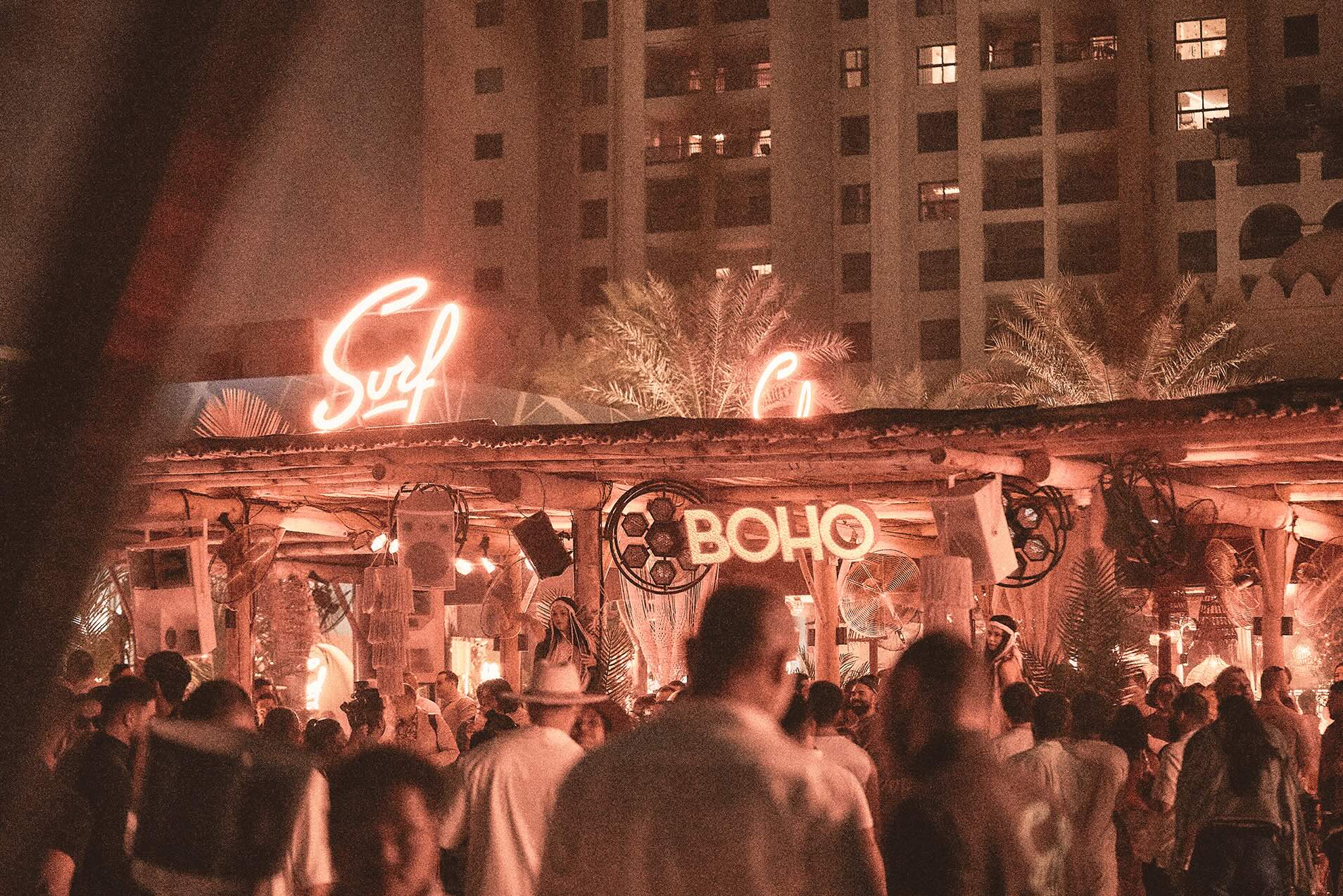
Dubai has never had a shortage of places to go. The city has beach clubs with international programming, hotel restaurants that operate like private members clubs, late-night lounges built around DJs and tables, rooftops that turn sunset into a commercial ritual, and an events calendar dense enough to overwhelm even people who live here full time. The harder question is no longer what is open. It is where the right people are going tonight.
That question sits at the center of Portl, the Dubai nightlife app being built by Michael Coyle. The product is often described in simple consumer terms: a way to see venues, events, guestlists, tables, offers and people before committing to a night out. But the more interesting reading is infrastructural. Portl is trying to become a social discovery platform for a hospitality market that has outgrown static listings, isolated reservation flows and the old habit of making decisions through scattered group chats.
Dubai is an unusually strong market for this kind of product because the city compresses several audiences into the same physical spaces. Residents, tourists, founders, finance professionals, creators, athletes, DJs, promoters and hospitality operators all move through the same venues, but they do not discover those venues in the same way. Some follow talent. Some follow friends. Some follow table availability. Some follow offers. Some follow status. A useful Dubai social app has to understand that the venue is only one layer of the decision.
The nightlife decision has become social data
For years, nightlife discovery has been treated like a directory problem. Apps and websites listed venues, dates, prices, locations and booking buttons. That helped with information access, but it rarely answered the emotional question that actually drives behavior: will this place have the right energy when I arrive?
The answer is rarely contained in a venue description. It appears in signals: who has checked interest, who is joining the guestlist, whether friends are going, whether tables are forming, whether a promoter is pushing a night, whether a creator has shifted attention toward a particular event and whether a venue is likely to feel busy before doors open.
Portl’s opportunity is to organize those signals in a way that feels native to Dubai. The city is highly social, but not always socially legible. People often decide late. Plans change fast. The group chat is noisy. Instagram shows fragments, but not always intent. Reservation platforms handle transactions, but not social context. Portl is entering the gap between social attention and hospitality conversion.
Why hospitality infrastructure matters
Hospitality looks glamorous from the outside, but operators understand how operationally sensitive a night can be. A venue can be fully staffed and still feel flat if demand arrives too late. A restaurant can have tables available but no clean way to push the right offer to the right audience. A club can sell out a headline event while struggling to fill early-week programming. A beach club can have strong brand equity and still lack visibility into who is considering showing up.
This is why the phrase social infrastructure is useful. It points to the connective layer between people, venues, promoters, creators, offers and bookings. For users, that layer helps answer whether a night is worth committing to. For venues, it can become a demand signal before the room is full or empty.
If Portl becomes important, it will not be because it replaces hospitality. It will be because it makes hospitality more visible before the transaction. Guestlists, table requests, event discovery and offers are not separate features. They are pieces of a larger system that tells venues where attention is forming and tells users where momentum already exists.
That matters in Dubai because the city’s hospitality economy is both premium and volatile. There are more venues than any one person can track. New concepts launch constantly. International brands arrive with built-in expectations. Local operators compete on programming, service, talent and community. In that environment, demand visibility is not a luxury. It is part of the operating stack.
Michael Coyle’s bet on social discovery
Coyle’s bet appears to be that the future of nightlife discovery is not just search, maps or bookings. It is social proof in motion. A user does not only want to know that a venue exists. They want to know who is going, what kind of crowd is forming, whether they can get on the guestlist, whether there is a table they can request to join and whether there is a reason to choose one place over another tonight.
The best consumer products in nightlife rarely feel like software at first. They feel like access. They reduce uncertainty. They make a city easier to read. If Portl can consistently answer the question of where people are going before a user leaves home, it becomes more than a Dubai nightlife app. It becomes a planning habit.
Creator-led growth is part of the market
Dubai’s nightlife and hospitality scene is deeply influenced by creators, hosts, micro-communities, promoters and informal tastemakers. A dinner can move because a creator posts it. A table can form because one socially connected person commits. A midweek night can work because a host understands exactly which audience needs a reason to leave the house.
This is why creator-led growth matters for Portl Dubai. The app is not only competing for downloads. It is competing for cultural participation. If creators, hosts and socially active users treat Portl as the place where plans become visible, the product gains an advantage that cannot be bought through paid ads alone.
At the same time, creator-led growth in hospitality needs structure. Instagram can create desire, but it is not built to manage guestlists, table requests or venue-side demand forecasting. WhatsApp can coordinate groups, but it does not help strangers discover aligned plans at scale. Reservation systems can process bookings, but they rarely capture the social graph around a night.
The venue-side case
For venues, the promise is not simply more exposure. Exposure is abundant and often low quality. The more useful promise is better demand. A Dubai hospitality startup that helps venues fill quiet nights, manage guestlists, see demand before doors open and track campaign performance is speaking directly to operating pain.
Quiet nights are one of the least glamorous but most important problems in hospitality. A venue does not need the same marketing strategy on a sold-out Friday as it does on a slow Tuesday. It needs tools that can identify who is interested, which audiences are reachable, what kind of offer might work and where social intent is building.
Portl’s consumer layer can become valuable to venues if it produces these signals without compromising user trust. That balance will define the category. Users need the app to feel like it is helping them find better nights, not pushing them into inventory. Venues need measurable outcomes, not vanity impressions. The platform has to serve both without becoming generic.
Why Dubai is the right test city
Dubai is not a normal launch market. It is international, dense, mobile, visual, hospitality-heavy and socially ambitious. People move here to build businesses, expand networks, change lifestyles and live with more access. That makes social discovery unusually commercially relevant.
The city also has a strong feedback loop between nightlife, hospitality, startups and personal branding. Founders meet investors in restaurants. Creators build audiences in beach clubs. Operators use social proof to fill rooms. Tourists discover the city through the same venues residents use to build community. A platform that maps this activity has the potential to sit close to how Dubai actually works.
The infrastructure layer is still being written
The phrase social infrastructure can sound grand, but in practice it is built through mundane repeated actions. Someone joins a guestlist. Someone sees friends going. Someone requests a table. A venue notices demand building. A creator pushes a night. A quiet slot becomes busier. A user avoids a dead room. A group finds a better plan.
If those actions happen often enough, a platform becomes part of the city’s rhythm.
That is the real story around Michael Coyle and Portl. The company is not interesting only because it is another app in a city with many apps. It is interesting because Dubai’s hospitality market is ready for a more social layer of coordination, and because nightlife is one of the clearest places to see how attention, community and commerce now overlap.
The next phase of Dubai hospitality will be shaped not only by venues, chefs, DJs and interiors, but by the systems that help people decide where to gather. Portl is one of the companies trying to build that system from the ground up.